
These are the common anxiety symptoms we talk about in my therapy room. How you experience them is very personal, but believe me, you’re not alone.
When you have anxiety you may seem really calm on the outside, but inside, your brain is working overtime to think up every worst case scenario possible for what lies ahead!
Overthinking is one of the main symptoms of anxiety, but rather than just having a long list of things you need to do, these thoughts are worries about what could happen, what other people think, what could go wrong, and berating yourself for not living up to your own expectations.
In fact, expectations are high in anxiety – there’s an underlying frustration that things are not the way they’re supposed to be. Like having a rose tinted view of an ideal world.
Here are the common areas I discuss with my clients:
- Overthinking
- Sleep problems
- Brain fog
- Panic attacks & anxiety attacks
- Social anxiety
- Body tension
- Worry about the future
- Dwelling on the past
It’s helpful to decide how much each of these areas is impacting your life. If you know which one is the biggest problem for you, tackle that first in any way you can. This will bring the greatest relief to you.
I chart out client responses so they can see the improvements they’ve made over their time with me. As you can see from these examples, everyone is different and outcomes really depend on their lifestyle in general, what other things they are doing to help themselves and what their mind needs the most at the time.

Overthinking
The brain will keep sending messages to you until you’ve solved the problem. This is great when you have a big project at work, or you need to plan a journey. But it’s not great when overthinking is about things you can’t control, like:
X Other peoples actions
X Other people’s opinions
X Tasks that are not your own
X World peace
It’s important to get clear on what your thoughts are when you overthink, times of day when it happens more, circumstances you’re in at the time it happens. Viewing it from outside the box can help you see patterns of behaviour, so you can start to reassure yourself.
Sleep problems
This is a huge subject! What are sleep problems exactly? We all imagine that those people who say they sleep well are falling asleep as soon as their head hits the pillow, then waking up refreshed exactly 8 hours later, having not moved, nor gotten up to use the bathroom. But a good night’s sleep is subjective and I’ve not yet met anyone who has perfect sleep all the time!
Sleep problems include:
- Waking in the night
- Difficulty falling asleep
- Dreaming a lot but not sleeping deeper
- Not getting enough good quality sleep (not everyone needs 8 hours though)
There are a couple of things that make sleep worse:
- Having a stressful, busy life (plus or minus anxiety).
- Alcohol. It lulls you into a false sense of security so you fall asleep easily, then it causes a surge of cortisol to course through your veins, waking you up feeling anxious.
Brain fog
I use this term because that’s what many of my clients call it. Also known as poor concentration, a bad memory, or forgetfulness.
Brain fog is common when you’re not sleeping well – the body needs energy to work physically, and there’s just not enough spare for your mind as well. But if you can get through the day working on auto pilot, you don’t need to think so much eh?
Panic attacks & anxiety attacks
These are often confused as being the same thing, when they’re experienced very differently.
An anxiety attack is slow burning – it comes on slowly and builds and builds until it stops you doing something. Like going to an event, for example. It feels like a worry that’s stuck and often impacts your stomach, making you feel sick or light headed. It’s a horrid feeling that makes you feel too unwell to face whatever you’re anxious about.
You usually know what’s making you anxious and have been overthinking about this for a while.
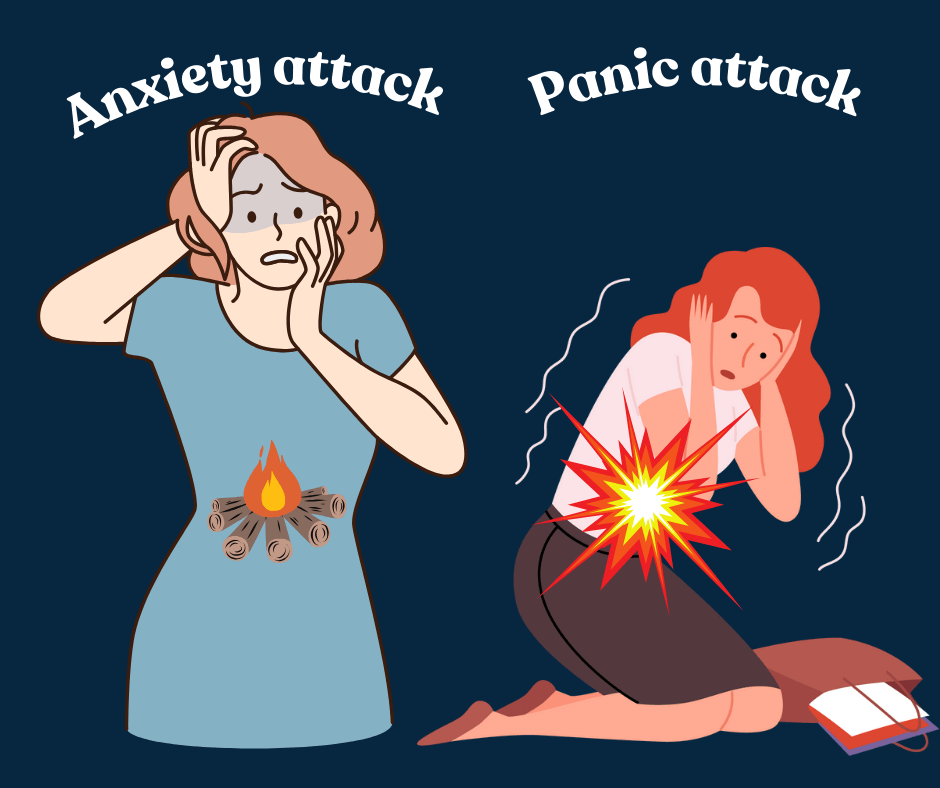
A panic attack is sudden. It comes from nowhere, often when you’re actually feeling fine! It can happen anywhere, anytime. It stops you in your tracks because you feel like you’re having a heart attack. There’s the feeling of a heavy weight on your chest. You may feel dizzy or numb in your extremities. You’re likely to feel your heart racing with palpitations. It can cause huge embarrassment if you’re in public when it happens.
You’ve no idea why it came. But it was your nervous system reaching a point of no return – it simply wants you to SLOW DOWN.
Social anxiety
This is a standalone type of anxiety, but is also apparent in those with general anxiety. Having anxiety is tiring. You want to see people and join in, but you don’t know how much energy you’ll have on the day of an event. You also don’t know if you’ll have an anxiety attack that stops you going.
You worry about the event itself, the location, the food, the drink, when it will end, who will be there, what they will think of you….the list goes on.
Afterwards, you worry about how you came across to others, what you said, how you acted, what people think about you. It’s very draining.
Body tension
There’s a sweet spot for everyone where their anxiety sits. For some it’s in the abdomen. For others, it’s the chest, shoulders or head. It’s like all the energy of worrying collected in one place in your body. You might feel it there all the time. Or just sometimes.

It can affect your appetite, cause you to pull muscles, affect your breathing and even give you migraines and headaches.
Worry about the future
This is probably the biggest worry for those with anxiety – all the ‘what if’s’. Every scenario possible for what could go wrong. A thought pops into your head and you almost respond to it….’oh yeah, what if that happens?’ Then you sit ruminating over it for ages. Choosing to think about worse case scenarios.
Training the brain to think of all the things that could go right can help alleviate this.
Dwelling on the past
Often, when we think ‘what if’ we check back over past events to see what went wrong before and create a plan to prevent problems. But there’s also some form of regret in there, with mulling over what we wish we could have done differently, along with grief over what’s changed.
For more information on anxiety and panic attacks, please visit https://www.mind.org.uk/information-support/types-of-mental-health-problems/anxiety-and-panic-attacks/symptoms/
If you’re struggling with any of the symptoms listed, my anxiety busting package is just what you need. Tried and tested over the past two years, I’ve helped many people overcome lifelong anxiety, so they can now live life to the full!